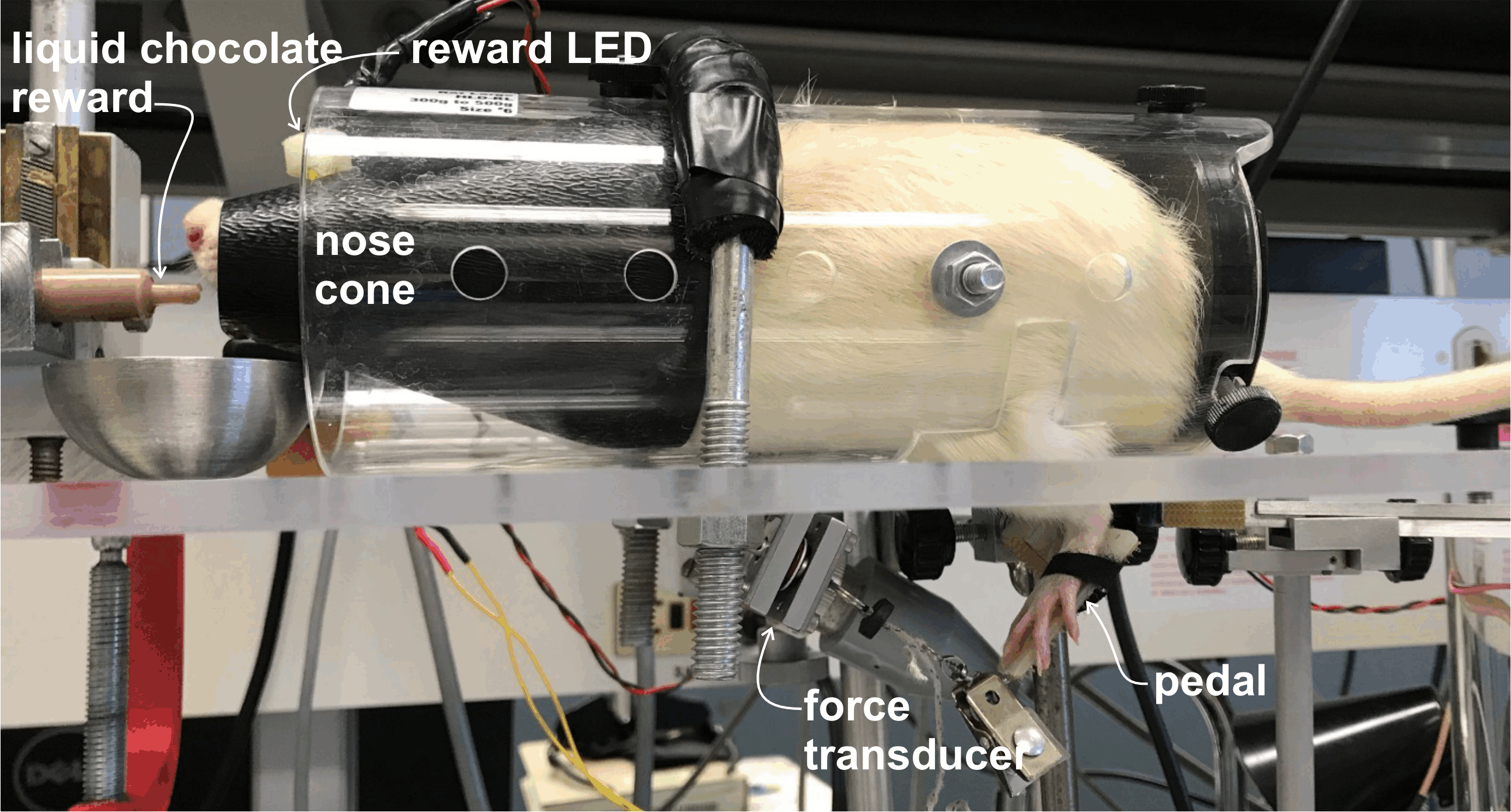
Physiological Significance of Persistent Inward Currents in Motor Neurons (supported by NIH grant NS – 130098). Motor neurons have active processes, such as persistent inward currents (PICs), that may markedly alter the relationship between synaptic input and firing rate output. The goal of this project is to directly ascertain the role that PICs play during voluntary muscle contraction. The ion channels implicated in PICs are selectively enabled or disabled by injecting drugs into the space surrounding the spinal cord in rats performing a specified motor task while motor unit activity is recorded.
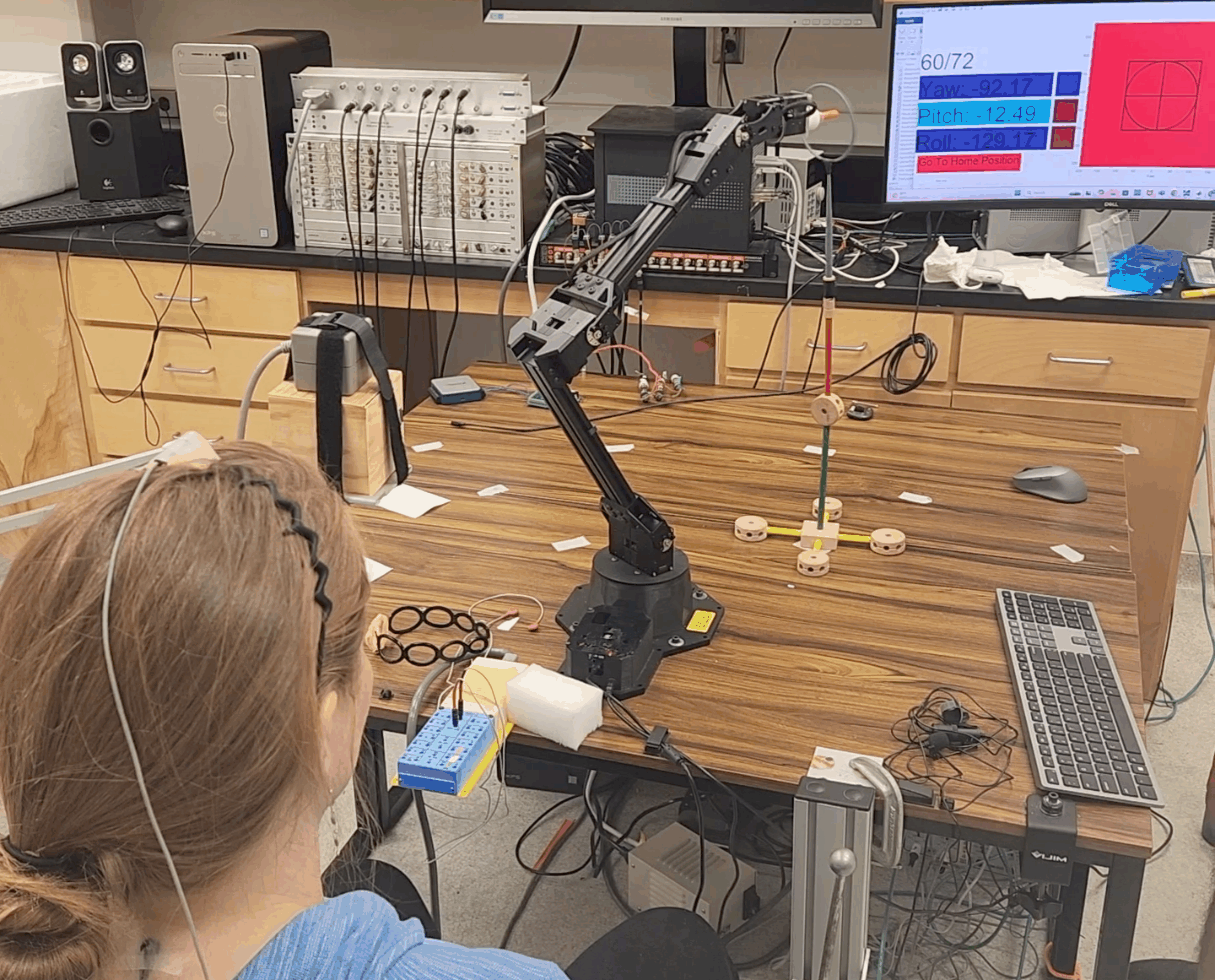
Hands-Free Control of a Robotic Arm for High Level Tetraplegics (supported by NIH Grant NS 130397)- Recent advances in assistive robotic arms attached to wheelchairs has greatly enhanced the ability of tetraplegics to perform some of these tasks. Because the control of these robotic arms requires the hand to manipulate a joystick, they are unavailable for use by most high-level tetraplegics. This obstacle could be partially overcome if there were alternate means by which a user could convey desired actions to a robotic device. The most noteworthy approach to this problem has been the identification of intended movements from neural recordings obtained through electrodes implanted in the brain. The main goal of this project is to evaluate the efficacy of non-invasive, safe, and inexpensive methods to control movements of a robotic limb
Restoration of Hand Movements Using Wireless Functional Electrical Stimulation (supported by UA Technology and Research Initiative Fund ) – The goal of this project is to restore hand and finger movements in paralyzed individuals using functional electrical stimulation (FES). FES involves artificial activation of paralyzed muscles using electrodes implanted in muscles or surrounding nerves. We are testing the efficacy of wireless, injectable microstimulators to activate muscle and thereby obviate the need for major surgery to implant such a system.

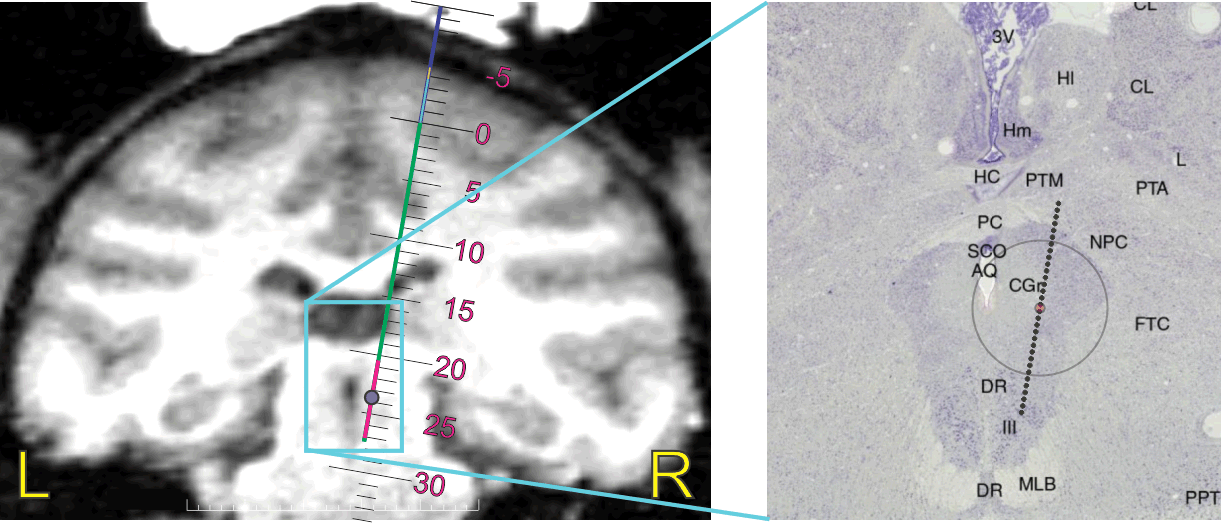
Neural Basis for the Production of Facial Expressions – Facial expressions represent a fundamental aspect of social communication among primates, impairment of which is a cardinal feature of several neurological and psychological disorders. This project aims to identify the brain structures involved in the production of emotion-specific facial expressions. We are doing this through a combination of high-density neural recording, inactivation, and stimulation of various nodes in putative facial expression pathway in awake non-human primates.
Evaluation of a Miniature, Injectable, Wireless Stimulator to Treat Obstructive Sleep Apnea (Supported by StimAire, Inc.) – Obstructive sleep apnea affects a large segment of the US population and is characterized by repetitive and reversible obstruction of the upper airway by the tongue during sleep. One effective treatment is stimulation of the nerve supplying the tongue to gently advance the tongue, and thereby maintain a patent airway during sleep. The goal of this project is to test, in rabbits and humans, the efficacy of a miniature stimulating device that that can be injected adjacent to the target nerve under ultrasound guidance to wirelessly activate the tongue and curtail obstructive sleep apnea.

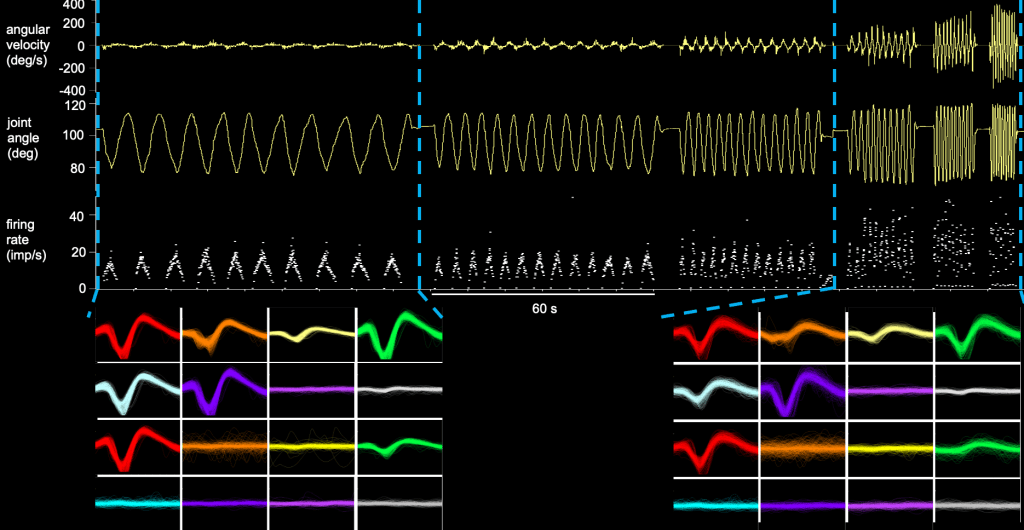
Development of an Inexpensive, Easy-To-Fabricate, Reusable Intramuscular Multielectrode Array (supported by NIH grant NS – 130098) – The goal of this project is to develop flexible, robust, reusable, and inexpensive intramuscular microelectrode arrays that can be used to track the activities of multiple motor units during strong contractions and vigorous movement.
 Fuglevand Lab